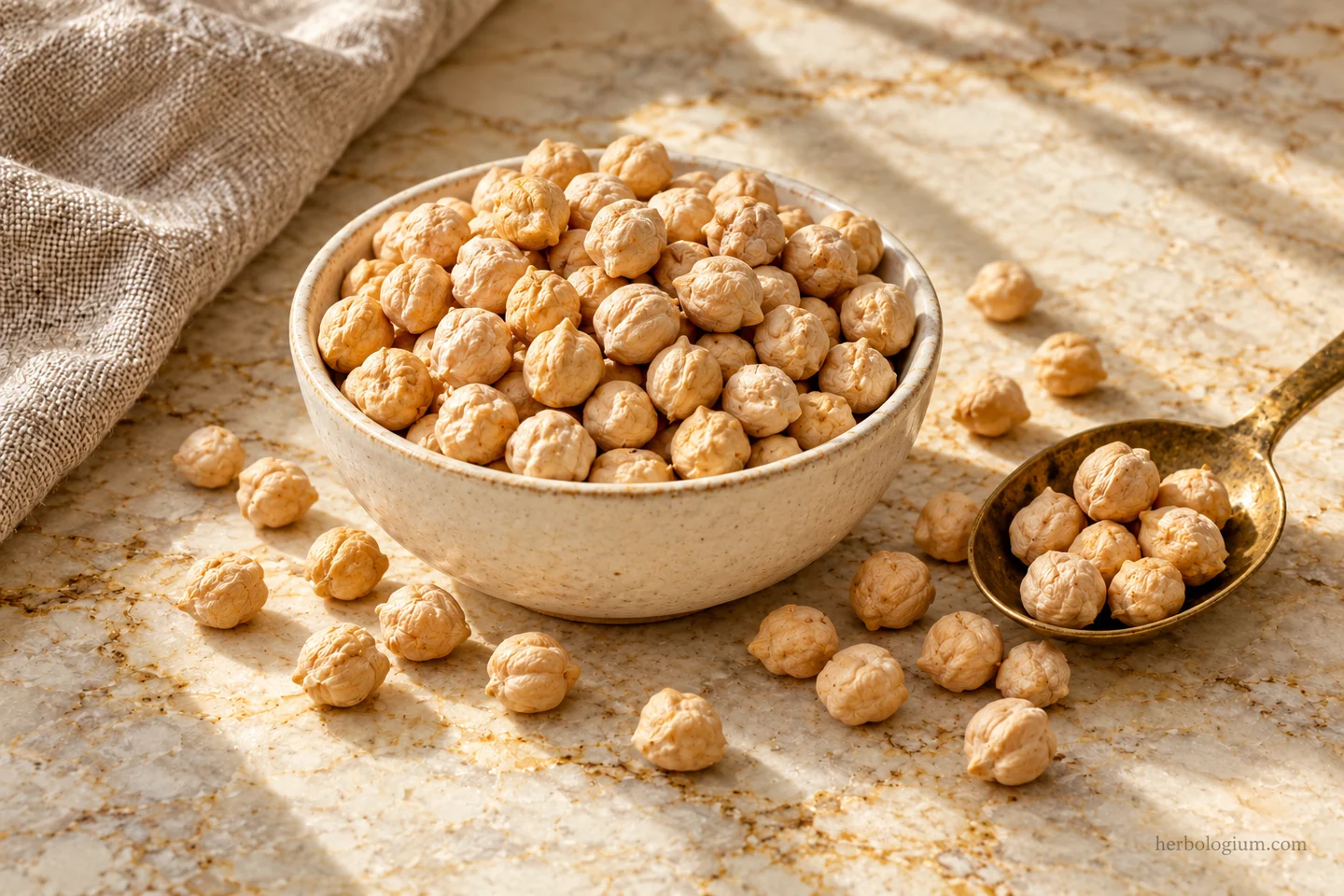
The paper on the table
Johnson, S. K., Thomas, S. J., & Hall, R. S. · 2005
Abstract-based reading · consulted October 17, 2026. A selected teaching example, not a systematic review or dietary recommendation. Full-text methods, funding, registration and risk of bias have not been assessed.
- Study design
- Randomized, single-blind crossover study.
- Who took part
- 12 healthy volunteers recruited; 11 completed.
- Studied preparation
- Chickpea-flour or extruded-chickpea-flour bread breakfasts, each with 50 g available carbohydrate.
- Compared with
- White-bread breakfast, tested twice.
- Time frame
- Four breakfast visits, with postmeal measures and subsequent food intake.
- What was measured
- Glucose, insulin, satiety, palatability and food intake.
- Reported finding
- The lower glucose response with chickpea bread was a trend (P = 0.087), while insulin response was higher. No differences in glycaemic index, satiety, food intake or palatability were detected.
- Uncertainty
- The abstract provides no confidence intervals for these contrasts. Small sample size and multiple outcomes warrant a careful reading.
- What this cannot tell us
- Flour baked into bread is not interchangeable with whole chickpeas in a salad. A trend is not a demonstrated glucose benefit.
Which result would a headline leave out?
Write a one-sentence account that retains the unexpected and null findings. If it cannot fit honestly, shorten the promise rather than deleting the inconvenient outcome.
Take this question to the next paper
Who took part? What exactly was prepared, compared, and measured? Which result remains uncertain? Keep those answers beside any claim you save. These are editorial reading prompts, not findings from the paper.
KEEP THE FOOTNOTES
Sources & further reading
Johnson, S. K., Thomas, S. J., & Hall, R. S. · 2005
European Journal of Clinical Nutrition, 59(2), 169–176. Primary trial; reading card based on the PubMed abstract, consulted October 17, 2026.
Something to add or correct? Prepare a note for the collection.
Your notes on this card
What worked, what you changed, what you want to remember. Private to this browser.