Literary appearance
Rosemary, for remembrance
A sprig of rosemary becomes part of Ophelia's language of grief.
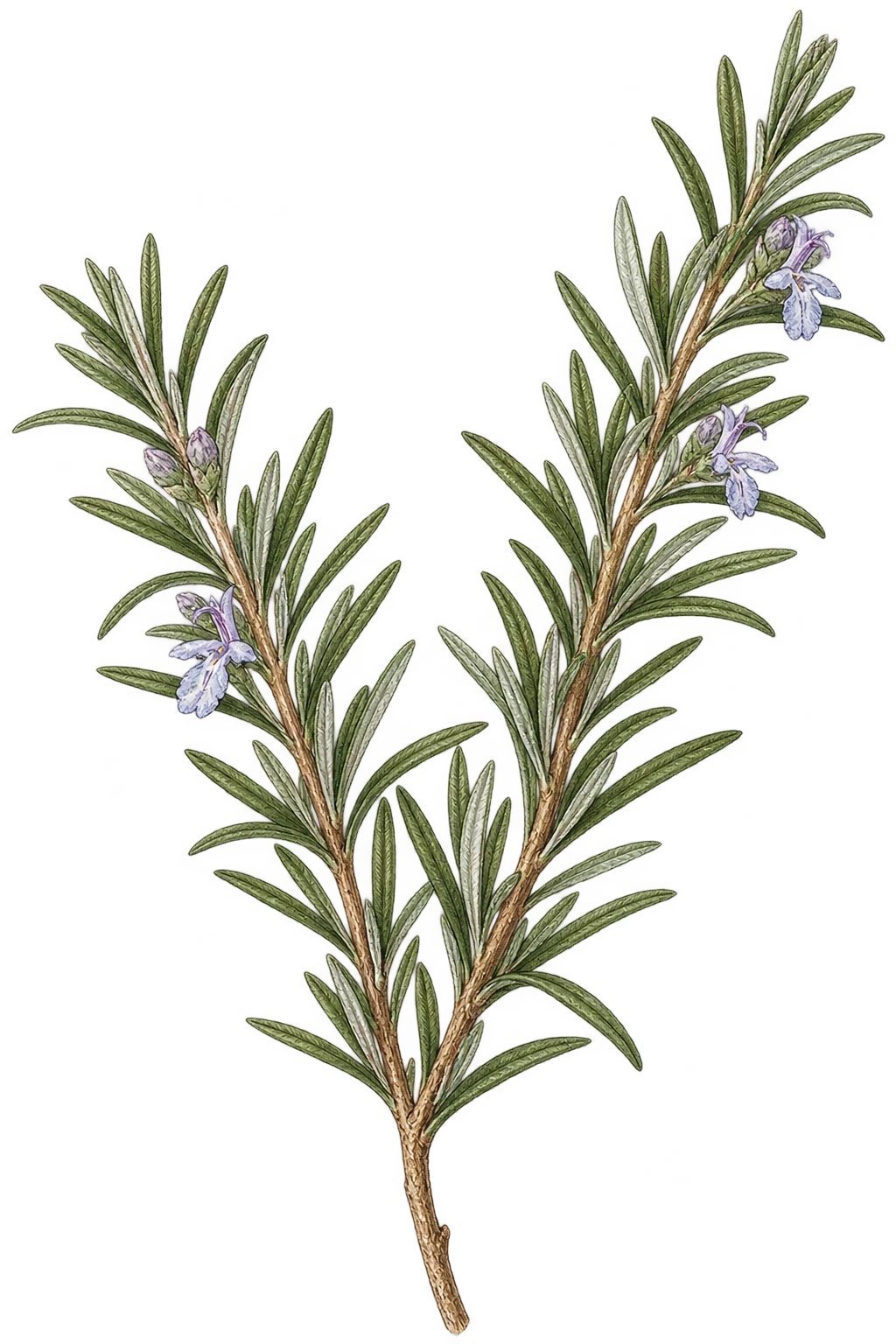
Rosemary · Generated decorative study
AI-generated for Herbologium · Herbologium · AI-generated decorative artwork
View the source record ↗Image source: https://herbologium.com/about#artwork · Original decorative illustration generated with OpenAI ImageGen. Not a historical plate or a plant-identification diagram.
THE STORY
In Hamlet, Ophelia names rosemary for remembrance and pansies for thoughts. Her words occur amid the grief following her father's death. The familiar plants become part of the scene's language of memory, loss and an appeal to be remembered.1
“There’s rosemary, that’s for remembrance.”
William Shakespeare wrote the play. The linked text is the Folger Shakespeare Library's edition, Act 4, Scene 5. This is a literary scene, rather than an account of a custom observed by a researcher.1
The play belongs to English theatre around 1600 and was first printed in 1603. Its dramatic setting is Denmark; the scene is not an ethnographic record of Danish custom.12
Reading this account
Rosemary could carry a recognizable association with remembrance in this literary work. That symbolism gives the herb a cultural history worth studying; it does not establish a physiological effect on memory.1
What the source leaves open. A literary association with remembrance does not demonstrate an effect on memory.
KEEP THE FOOTNOTES
Sources behind the story
- Hamlet, Act 4, scene 5
Primary literary text. The rosemary passage documents a literary association, not a medical effect.
- Hamlet: An introduction to this text
Publication history for Hamlet, including the first printed edition in 1603. Supports historical context for the literary account, not a claim about a Danish custom.
Back to the reading:Passage 3 ↑
Source-based reading · Sources consulted October 17, 2026.
Something to add or correct? Leave a note for the collection.
Your notes on this story
A connection, a question, a passage to return to. Private to this browser.