THE BIOLOGY NOTEBOOK · 03
Preparation is part of the ingredient
Heat, water, texture, and time. A food's preparation belongs beside its name whenever we talk about nourishment.
look closely at the form
Source-based reading · Collection updated October 25, 2026
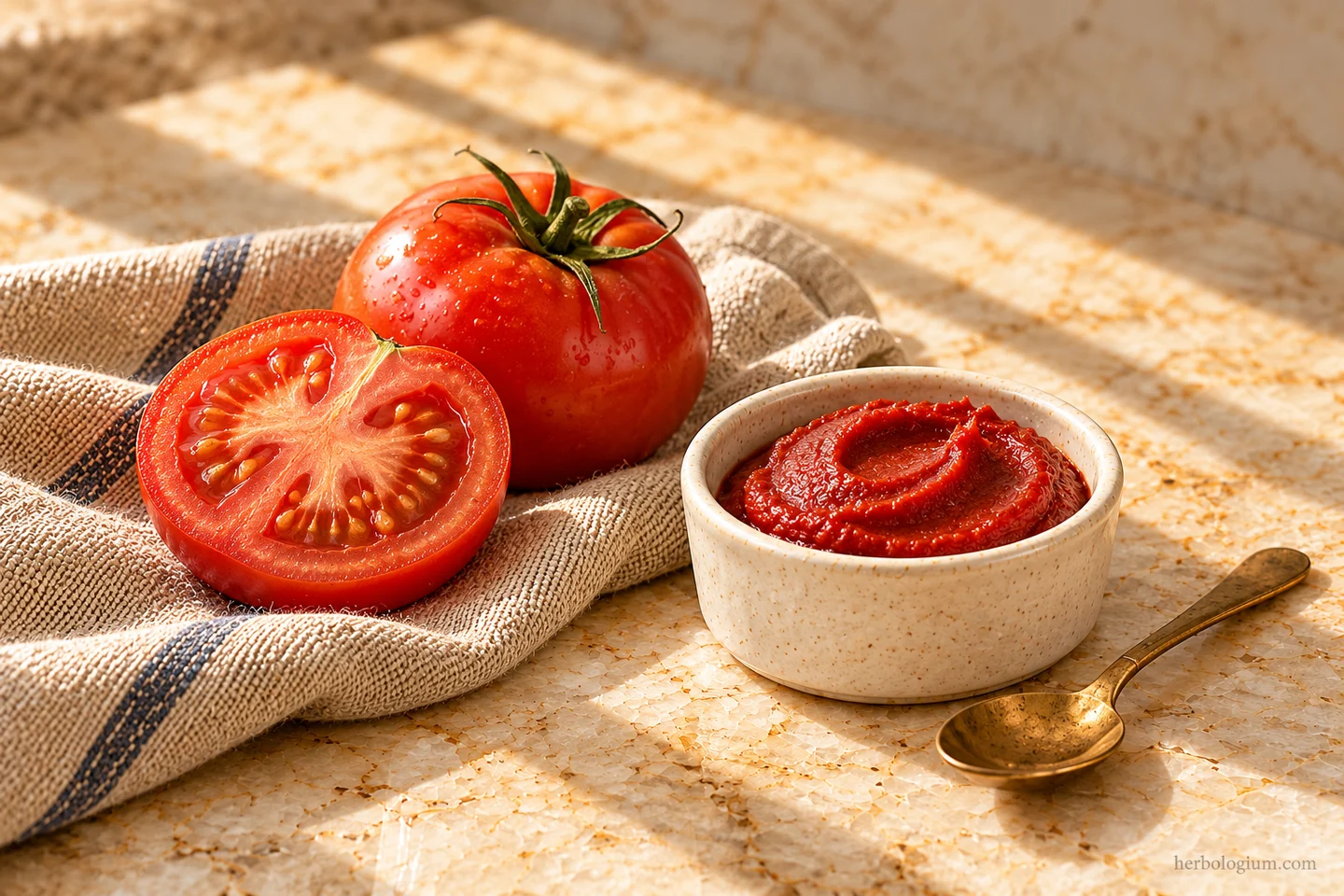
Fresh tomato and tomato paste — imagined food study · OpenAI image generation · Herbologium art direction. Original AI-generated editorial food illustration, made for Herbologium with Taj Mahal quartzite, flax linen and soft natural-light styling. Not a photograph of a real serving, a scientific diagram, or documentation of the food used in a study. The domain mark identifies the collection; no human photographer is claimed. No blanket reuse license is stated. Source: https://herbologium.com/body-illustrations.json
01 / FOLLOW THE QUESTION
What changes between ingredient and meal?
Follow the food, the preparation, and the outcome being measured. A change in one nutrient is only one part of the story.
STEP 01
Name what is on the table
Fresh tomato and tomato paste describe different preparations. Before comparing results, name the food and the quantity being measured.
Behind this stepRead all three steps
Name what is on the table
Fresh tomato and tomato paste describe different preparations. Before comparing results, name the food and the quantity being measured.
Source for this stepAsk what the method changes
Vitamin C can be reduced by cooking and prolonged storage. Its behavior does not stand in for every other component in the food.
Source for this stepSeparate amount from availability
The tomato study compared lycopene availability from fresh tomatoes and paste. Absorption is a particular outcome; it does not establish a long-term health benefit.
Source for this step
The complete explanation
Name what is on the table
Fresh tomato and tomato paste describe different preparations. Before comparing results, name the food and the quantity being measured.
Ask what the method changes
Vitamin C can be reduced by cooking and prolonged storage. Its behavior does not stand in for every other component in the food.
Separate amount from availability
The tomato study compared lycopene availability from fresh tomatoes and paste. Absorption is a particular outcome; it does not establish a long-term health benefit.
References are listed under “Behind the explanation.”
02 / READ A LITTLE CLOSER
Name the form
A useful nutritional description specifies a food's form and quantity. Fresh tomatoes, tomato paste, dry lentils, and cooked lentils are different things to measure. Water and preparation change the comparison.
Different components behave differently
Vitamin C is water-soluble and sensitive to heat. NIH notes that cooking and prolonged storage can reduce its amount, while steaming or microwaving may limit losses. The result depends on the ingredient and method.
An absorption example
A human study comparing tomato paste with fresh tomatoes found greater lycopene availability from the paste under its study conditions. That is an absorption finding about one compound, not proof that every processed food is preferable or that this preparation causes a long-term health benefit.
Bring the detail to the table
Ask which food, which preparation, and which outcome. Keep preparation and quantity beside any nutrition number. In a recipe, texture, flavor, time, and technique provide another useful kind of knowledge.
TAKE THE QUESTION WITH YOU
From this reading, into the collection.
Take the question into a recipe with a clearly described method.
 Recipe
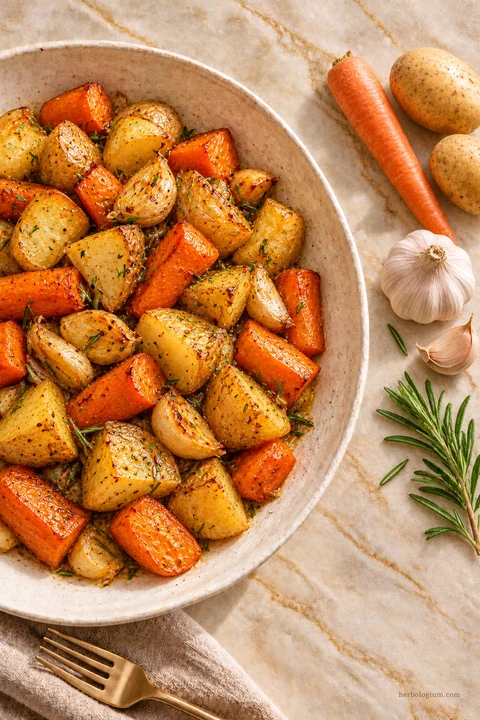
Rosemary-roasted roots
Potatoes and carrots roast with rosemary and garlic until their edges are golden.
AI-generated illustration: OpenAI image generation · Herbologium art direction. Rosemary-roasted roots — AI-generated serving illustration. https://herbologium.com/recipe-illustrations.json · AI-generated illustration; no blanket reuse license stated · AI-generated food scene refined to use Taj Mahal quartzite, flax linen and brushed brass, with a small visible herbologium.com mark. Separate portrait and landscape compositions; responsive sizes and JPEG/WebP encoding with embedded AI provenance.
Read a study where the food replaced matters to the comparison.
Two groups of 24 healthy adults.
Single-meal, postprandial testing.Lentils & a mixed meal
A meal-substitution study, read with the food on both sides of the comparison kept visible.
Look for the exact outcome behind a nutrition headline.
Read the claim. Follow the evidence.
Serving sizes, study designs, and the difference between a plausible idea and a measured outcome.
A QUESTION FOR YOUR OWN NOTEBOOK
What will you keep thinking about?
Which preparation detail would you want recorded before comparing two foods?
Your notes on this reading
A question, a distinction, a source to return to. Private to this browser.
03 / KEEP THE FOOTNOTES
Behind the explanation.
Original studies and reference material, with their scope kept intact. Source publication dates and consultation dates are shown separately.
- 01
Vitamin C: Fact sheet for health professionals
NIH Office of Dietary Supplements · n.d.
Includes the effect of storage and cooking on vitamin C.
https://ods.od.nih.gov/factsheets/VitaminC-HealthProfessional/ - 02
Lycopene is more bioavailable from tomato paste than from fresh tomatoes
Gärtner, C., Stahl, W., & Sies, H. · 1997
American Journal of Clinical Nutrition, 66(1), 116–122. Human absorption study; no long-term health claim is inferred.
https://doi.org/10.1093/ajcn/66.1.116
Something to add or correct? Prepare a note for this reading.