Basil pesto
Basil, garlic and grated cheese
This version briefly cooks the garlic and offers a mortar or food processor for the basil mixture.
45 minutes (source) · Yield not stated by source
Reported source details; omitted times or yields remain unreported.Recipe source: Wikibooks contributors (see page history)
Not independently kitchen-tested by Herbologium.

AI-generated illustration: OpenAI image generation · Herbologium art direction. Basil pesto — AI-generated serving illustration. https://herbologium.com/recipe-illustrations.json · AI-generated illustration; no blanket reuse license stated · AI-generated food scene refined to use Taj Mahal quartzite, flax linen and brushed brass, with a small visible herbologium.com mark. Separate portrait and landscape compositions; responsive sizes and JPEG/WebP encoding with embedded AI provenance.
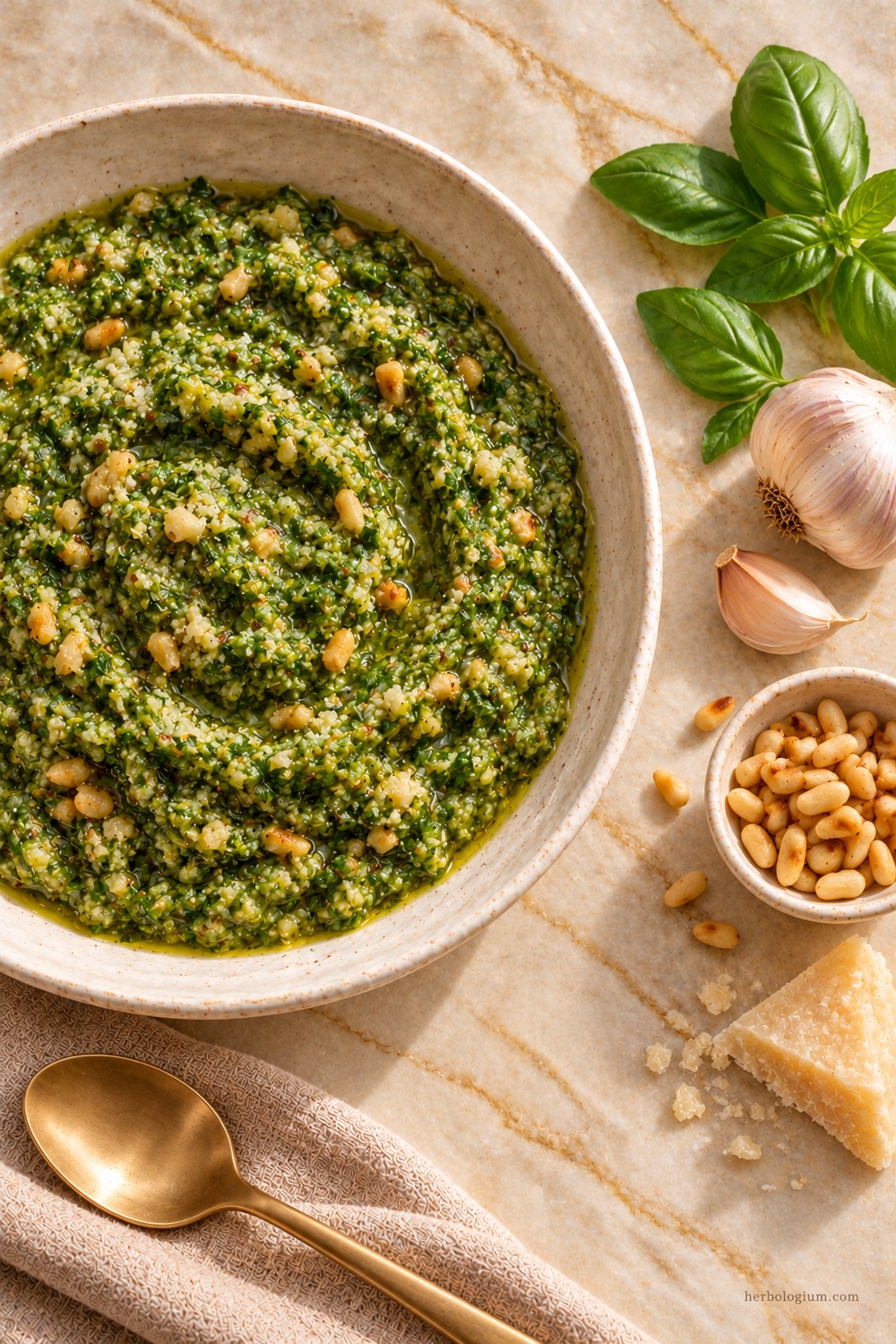
Gather
- 4 oz (100 g) fresh basil
- About 8 oz (200 g) extra virgin olive oil
- ⅓ cup freshly grated Pecorino Romano or Parmigiano-Reggiano cheese or a 1:1 mixture.
- ¼ cup pine nuts or nut of choice (optional)
- 4 cloves garlic
- Freshly ground salt and pepper (to taste)
Meet the plants
Make
- 01
Preheat the oven to 425 °F (220 °C).
- 02
If using, toast the pine nuts in an ovenproof pan for 10–15 minutes, checking every 5 minutes to prevent excessive browning or burning.
- 03
In a small frying pan (skillet), heat 2 tbsp of the olive oil on medium heat.
- 04
Crush the garlic and sauté in the oil until soft, about 2–3 minutes.
- 05
Combine the basil, garlic, cheese, pine nuts and oil in a mortar and pestle until it forms a smooth paste, or use a food processor or blender and chop finely, slowly adding the oil to reach the paste-like consistency.
Adapted from Cookbook:Pesto I, Wikibooks contributors, revision 4518820. CC BY-SA 4.0. Editorially reviewed against the cited source. Not independently kitchen-tested by Herbologium. Timings and yields are those reported by the source; omitted values remain unreported.
Keep what you learn
Your kitchen notes
Cooking dates, substitutions, and things to try next time. Kept privately in this browser.
FROM THE STOVE TO THE BOX
Your times at the table.
A date, a substitution, a small discovery to bring to the next meal.
Opening your cooking notes…
Your notes on this card
What worked, what you changed, what you want to remember. Private to this browser.
Food & place
Follow this recipe into the Atlas.
- Regional tradition
Wikibooks connects pesto alla genovese with Genoa, Liguria. This recipe is one version within that tradition.
Why this connection?
FOLLOW AN INGREDIENT
From the pot to the collection.
Places in the pantry
Accounts in our Atlas that share these ingredients.
Korea →The Maghreb →Saint-Louis, Senegal →Bring a plant to the study table →THE THINGS WE PASS ON
Keep this recipe in a booklet.
Gather public recipes, regional folios and your family cards into a collection to print. Keep the original words, scans, names and stories together; add cooking notes when you want them.
Begin with a sourced public recipe or regional folio, or add your own family recipes and stories.
Keep the source beside the recipe
Sources & presentation
Collection updated: October 17, 2026
Wikibooks contributors (see page history). (2025). Cookbook:Pesto I.
https://en.wikibooks.org/wiki/Cookbook%3APesto_I
Reviewed version: https://en.wikibooks.org/w/index.php?title=Cookbook%3APesto%20I&oldid=4518820
CC BY-SA 4.0 · https://creativecommons.org/licenses/by-sa/4.0/
Changes: Ingredient and procedure sections adapted from the linked revision; wiki formatting and glossary links removed. Introductory text, images, nutrition estimates and optional storage guidance omitted. Herbologium supplies the title, summary and connected readings. The recipe adaptation is available under CC BY-SA 4.0.
Editorially reviewed against the cited source. Not independently kitchen-tested by Herbologium. Timings and yields are those reported by the source; omitted values remain unreported.
KEEP THE MAKER
Wikibooks contributors (see page history) · 2025
CC BY-SA 4.0
Editorially reviewed against the cited source. Not independently kitchen-tested by Herbologium. Timings and yields are those reported by the source; omitted values remain unreported.
What changed in this presentation?
Ingredient and procedure sections adapted from the linked revision; wiki formatting and glossary links removed. Introductory text, images, nutrition estimates and optional storage guidance omitted. Herbologium supplies the title, summary and connected readings. The recipe adaptation is available under CC BY-SA 4.0.
About this recipe and its connections
The recipe and its maker
This version briefly cooks the garlic and offers a mortar or food processor for the basil mixture.
This is Wikibooks contributors (see page history)’s version, published in 2025. Editorially reviewed against the cited source. Not independently kitchen-tested by Herbologium. Timings and yields are those reported by the source; omitted values remain unreported.
Wikibooks contributors (see page history)A thread to follow
The ingredient links lead to botanical profiles and, where available, separately sourced stories, places and research. A shared ingredient does not transfer the claims of one reading to another.
Something to add or correct? Prepare a note for the collection.
The cards beside this one
Follow the thread.
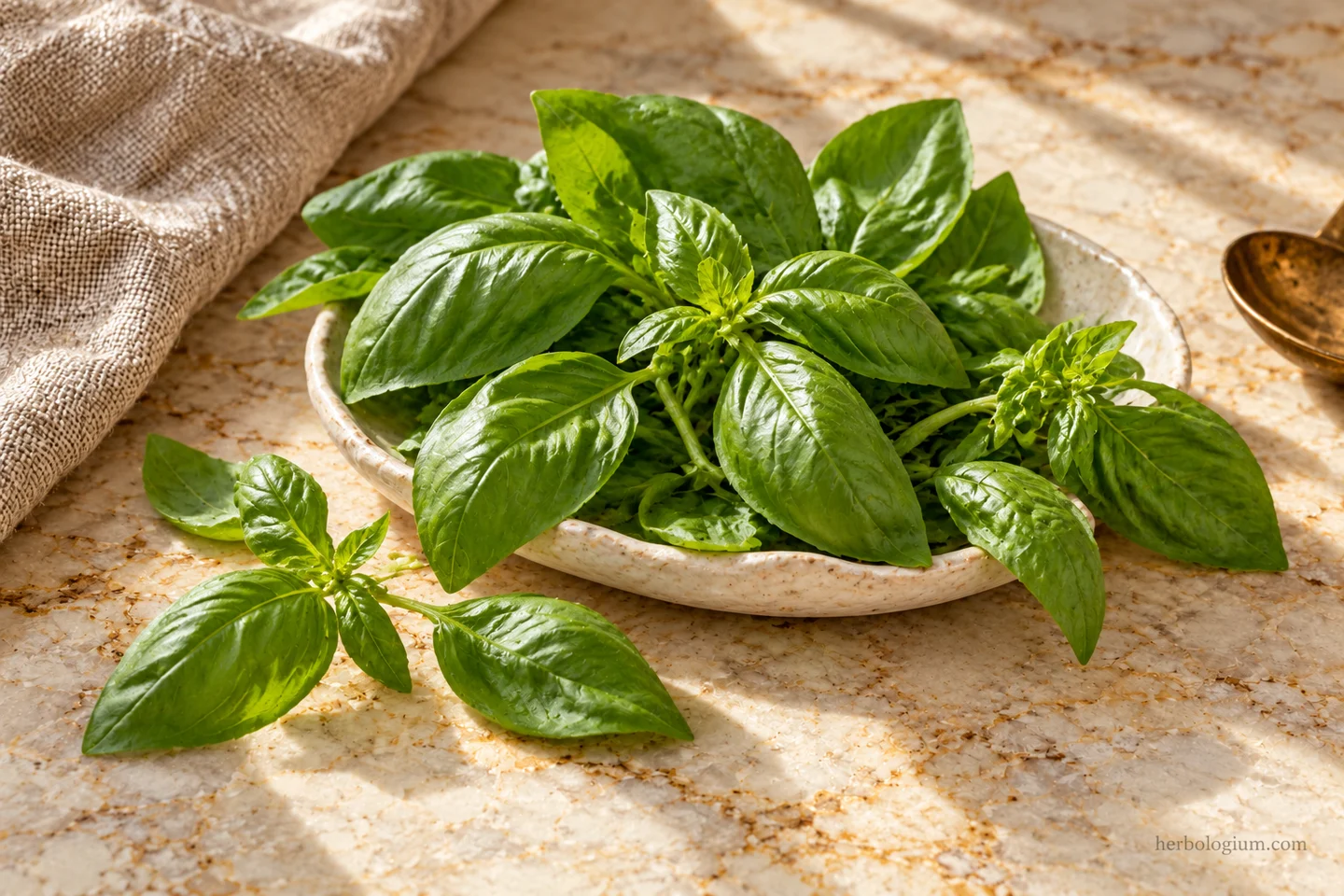 Plant profile№ 03
Sweet basil
An aromatic leaf at home in the kitchen, the garden, and a September observance.
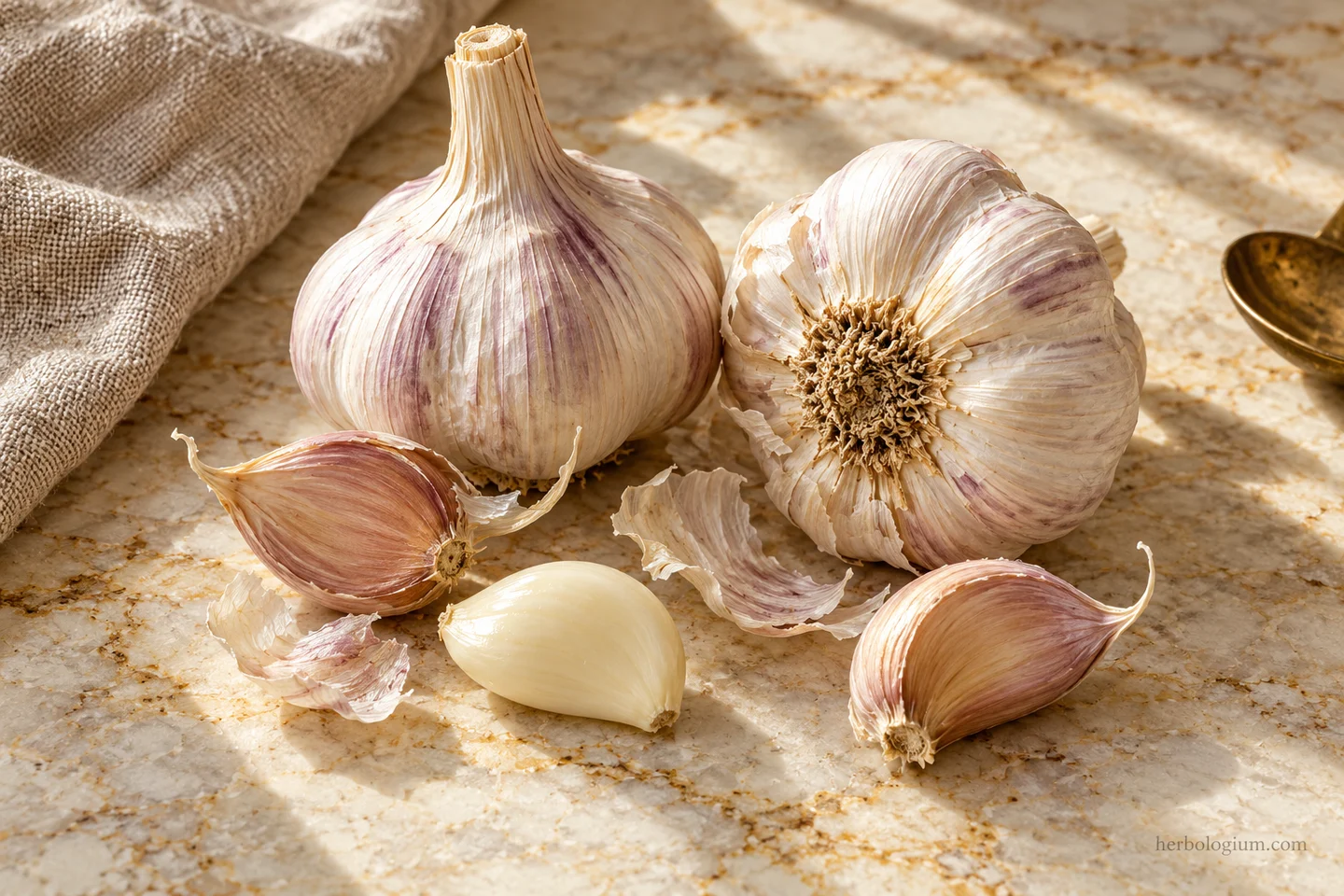 Plant profile№ 07
Garlic
An everyday bulb, a kitchen foundation, and the subject of one recorded family custom.
A garlic clove carried from home
One account of a familiar kitchen ingredient given a protective meaning.
Behind this story People, place & source
- Account
- Recorded family custom
- People & context
- One unnamed informant recalling his parents’ teaching
- Record / publication
- Randy Esparza; archive post May 14, 2023
- Time in the account
- Recollection; interview date not supplied
- Informant’s connection
- Veracruz, Mexico. The archive identifies where the informant comes from. The interview location and the practice’s distribution are not established.
- Limits of this reading
- One family recollection; neither prevalence nor supernatural protection is demonstrated.
Source reading checked October 17, 2026. The account and its interpretation remain attributed to their sources.
192 adults with LDL cholesterol of 130–190 mg/dL.
Six months; fasting lipids measured monthly.Garlic & blood lipids
Read a trial that keeps raw garlic, two supplements, and its comparison group in view.