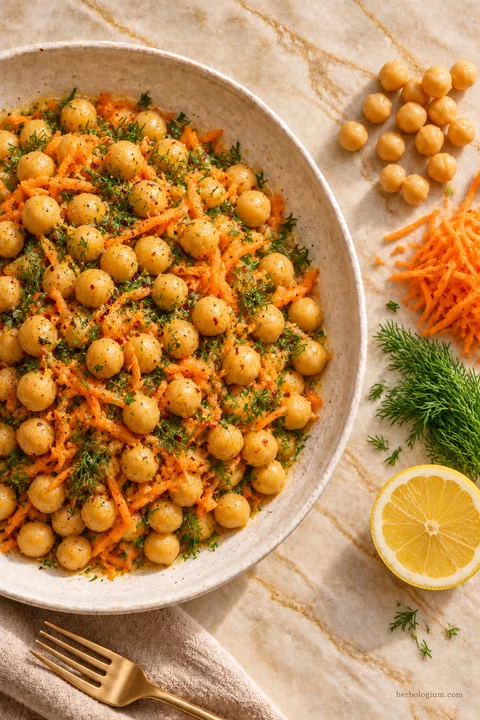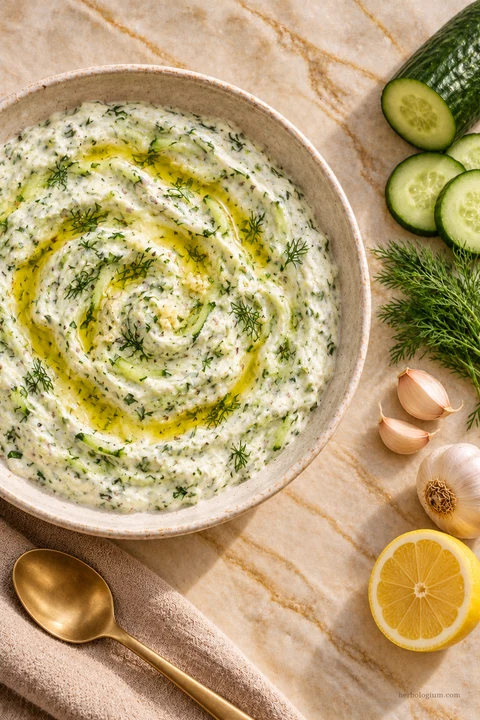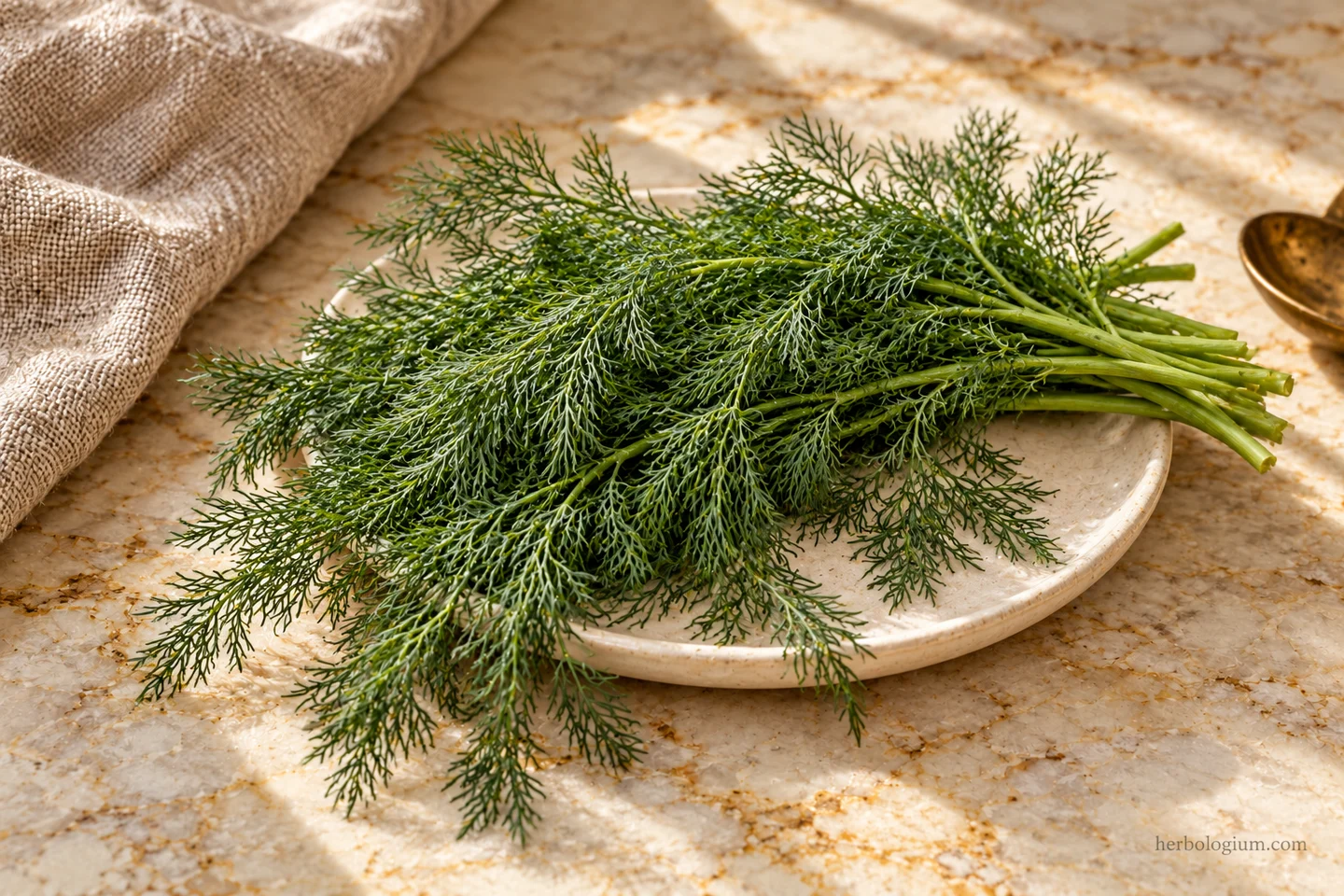
Dill — imagined ingredient study · OpenAI image generation · Herbologium art direction · AI-generated decorative artwork. Original AI-generated ingredient illustration, made for Herbologium with Taj Mahal quartzite, flax linen and soft natural-light styling. Not a photograph, botanical identification guide, or documentation of a historical custom. The domain mark identifies the collection; no human photographer is claimed. No blanket reuse license is stated. Source: https://herbologium.com/botanical-illustrations.json
Meet the plant
Dill's botanical name is Anethum graveolens. Its fine leaves and the spice commonly called dill seed are different culinary forms and should be named separately in a recipe.
At the kitchen table
Chopped leaves work as a finishing herb in a cool salad. The seed has a different texture and flavor; substituting it by equal volume changes the dish.
A thread to follow
When a family recipe simply says dill, a useful first question is which part was used and whether it was fresh or dried. That small detail can explain a surprisingly large difference between two versions.
KEEP THE FOOTNOTES
Sources & further reading
Royal Botanic Gardens, Kew · n.d.
Botanical identity.
Something to add or correct? Prepare a note for the collection.
Your notes on this card
What worked, what you changed, what you want to remember. Private to this browser.
BRING IT TO THE TABLE
Cook with dill.
All 5 connected recipes →An ingredient across tables
Find this plant in the Atlas.
These places connect through recipes or documented accounts using this plant. They do not describe its native range or place of domestication.
See these connections on the map →